
High-temperature flow channel for investigating catalytic reactions
The Laboratory for Optical Diagnostic Methods and Renewable Energies (ODEE) focuses on the optical and laser spectroscopic investigation of reactive flows. This expertise is now also to be used for the diagnosis of industrial catalytic processes. Specifically, the aim is to analyse heterogeneous catalytic processes that use sustainable materials and enable more efficient synthesis pathways. In addition, there is a major challenge in the defossilisation of organic chemistry (see diagram) through renewable raw materials such as bioethanol or green hydrogen.

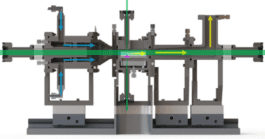
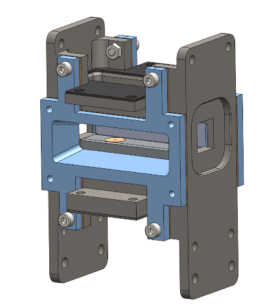
In close cooperation with the Reactive Flows and Measurement Technology and Technical Chemistry II institutes at TU Darmstadt, a catalytic flow channel was designed that is currently used for applications in the temperature range up to 300°C. For future reactions at up to 600°C, a new reactor will be installed in the test bench and the setup will be expanded to include new diagnostic methods.
Several student projects will be advertised for the project in the near future. Both final theses (bachelor's/master's) and IFPs are possible. Depending on interest and profile, the focus can be placed on the following areas:

Start: Now
High-temperature flow channel for investigating catalytic reactions
The Laboratory for Optical Diagnostic Methods and Renewable Energies (ODEE) focuses on the optical and laser spectroscopic investigation of reactive flows. This expertise is now also to be used for the diagnosis of industrial catalytic processes. Specifically, the aim is to analyse heterogeneous catalytic processes that use sustainable materials and enable more efficient synthesis pathways. In addition, there is a major challenge in the defossilisation of organic chemistry (see diagram) through renewable raw materials such as bioethanol or green hydrogen.


In close cooperation with the Reactive Flows and Measurement Technology and Technical Chemistry II institutes at TU Darmstadt, a catalytic flow channel was designed that is currently used for applications in the temperature range up to 300°C. For future reactions at up to 600°C, a new reactor will be installed in the test bench and the setup will be expanded to include new diagnostic methods.
Several student projects will be advertised for the project in the near future. Both final theses (bachelor's/master's) and IFPs are possible. Depending on interest and profile, the focus can be placed on the following areas:

Start: Now
